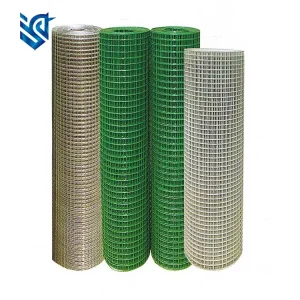
Reinforcing Mesh

High-strength welded steel mesh for concrete reinforcement, enhancing structural integrity, crack resistance, and load distribution in construction.

Additional information

Description

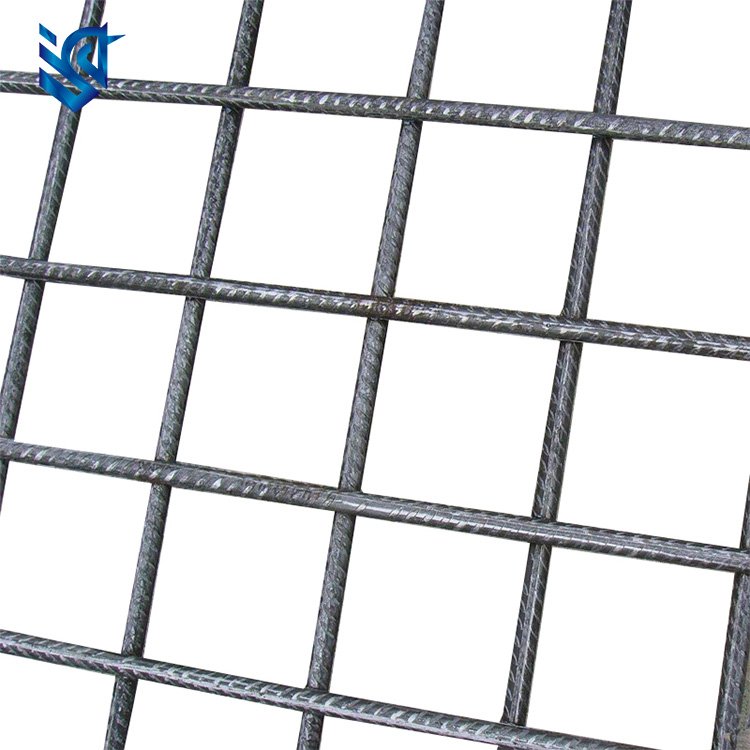
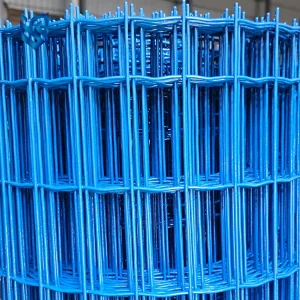
Reinforcing mesh, often referred to as rebar mesh or reinforcing welded mesh, is a grid made from steel bars or wires used to strengthen concrete structures. It provides additional support to concrete, which is inherently strong in compression but weak in tension. By embedding the mesh within concrete, the overall structural integrity is improved, helping the concrete resist cracking, bending, and other forces.

  • Material:Typically made from steel, providing high tensile strength.
  • Design:The mesh is usually arranged in a grid pattern, with wires or bars intersecting at right angles and welded at their intersections.
  • Sizes:Available in various thicknesses and grid sizes, depending on the specific requirements of the construction project.

Applications:

  • Concrete Slabs and Floors:Used to reinforce floors, pavements, and driveways to prevent cracking and improve durability.
  • Walls and Foundations:Helps distribute loads evenly in walls and foundations, ensuring stability.
  • Large-Scale Structures:Commonly used in tunnels, bridges, and large concrete structures to enhance strength and longevity.

Benefits:

  • Increased Strength:Reinforcing welded wire mesh panel significantly enhances the tensile strength of concrete, making it more resistant to stresses.
  • Load Distribution:Helps in evenly distributing loads across the concrete surface, reducing the likelihood of structural failure.
  • Ease of Use:Prefabricated mesh panels are easy to handle and install, making them a practical choice for construction.

Reinforcing mesh is a fundamental element in construction, this kind concrete mesh panel provides essential support to concrete structures and ensuring they can withstand various stresses over time.
as

Q1: What is reinforcing mesh used for?

Reinforcing mesh strengthens concrete structures (e.g., slabs, walls, driveways) by providing tensile resistance, reducing cracks, and improving durability. It holds concrete together under stress and temperature changes.

Welded mesh offers faster installation and uniform strength, while rebar is better for custom shapes and heavy-load applications. They are often combined for enhanced structural integrity.

It distributes stress evenly, resists shrinkage during curing, and holds concrete together during expansion/contraction caused by temperature changes.  

Common types include:  

-Welded wire mesh: Grids of welded steel wires.  

-Expanded metal mesh: Cut and stretched metal sheets.  

Materials include galvanized, stainless steel, or epoxy-coated variants for corrosion resistance.

Yes. Galvanized or epoxy-coated mesh is recommended for outdoor or high-moisture environments to prevent rust and extend lifespan.

Uncoated mesh can rust over time. Use corrosion-resistant options (galvanized, epoxy-coated, or stainless steel) in harsh environments.

Consider:  

– Project load requirements.  

– Concrete thickness.  

– Environmental conditions (e.g., moisture, corrosion risk).  

– Compliance with standards like ASTM A185 (welded mesh) or A497 (deformed steel mesh).

Sizes vary by wire spacing (e.g., 6″x6″ or 4″x4″) and wire gauge (e.g., 10 gauge = 0.135″ thickness). Custom sizes are also available.

Yes. Lightweight mesh (e.g., 6″x6″ 10-gauge) is common for driveways, patios, and floor slabs to prevent cracking.

Yes. Smaller gauges (e.g., 16-gauge)  or smaller mesh size.

Lay mesh on spacers/chairs to position it within the concrete, overlap sheets by 6–12 inches, and secure intersections with ties or welding.

Typically one full mesh spacing (e.g., 6 inches for 6″x6″ mesh) or as specified by engineering guidelines.

Use heavy-duty wire cutters, bolt cutters, or angle grinders with metal-cutting blades.

It is tied to rebar or secured with wire ties to formwork, ensuring proper concrete cover depth (usually 1–2 inches).

Ensure mesh stays positioned during pouring—use spacers and ties. Avoid walking on it to prevent displacement.

Properly installed and protected mesh can last 50+ years. Corrosion-resistant coatings significantly extend longevity.

Keep it dry, elevated off the ground, and covered to prevent rust. Avoid bending or stacking heavy items on it.

Small sections can be patched with additional overlaps. Severely corroded areas may require replacement.

Welded wire mesh follows ASTM A185/A497, while expanded metal may follow ASTM F1264 for fencing or construction applications.

We can supply Mill Test Certifications verifying compliance with ASTM/ISO standards and material composition.  And third party inspection is available.

Yes, but engineering specs must meet local codes. Higher-grade mesh or combined rebar may be required.

Mesh is often cheaper for labor (faster installation) but may cost more material-wise. Prices vary by gauge and coating.

Yes. Fibers control micro-cracks, while mesh handles larger stresses. They complement each other.

Measure the area, divide by mesh sheet size, and add 10–15% for overlaps. For example, a 1,000 sq.ft. slab may require 1,100–1,150 sq.ft. of mesh.

Ask For Quote

Just write the details then our staff will contact you shortly.