


Description
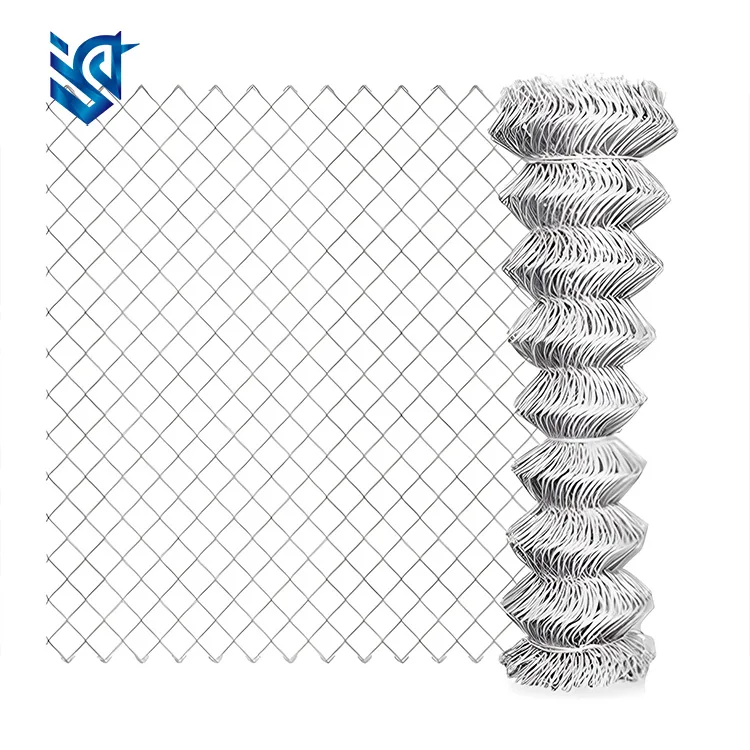
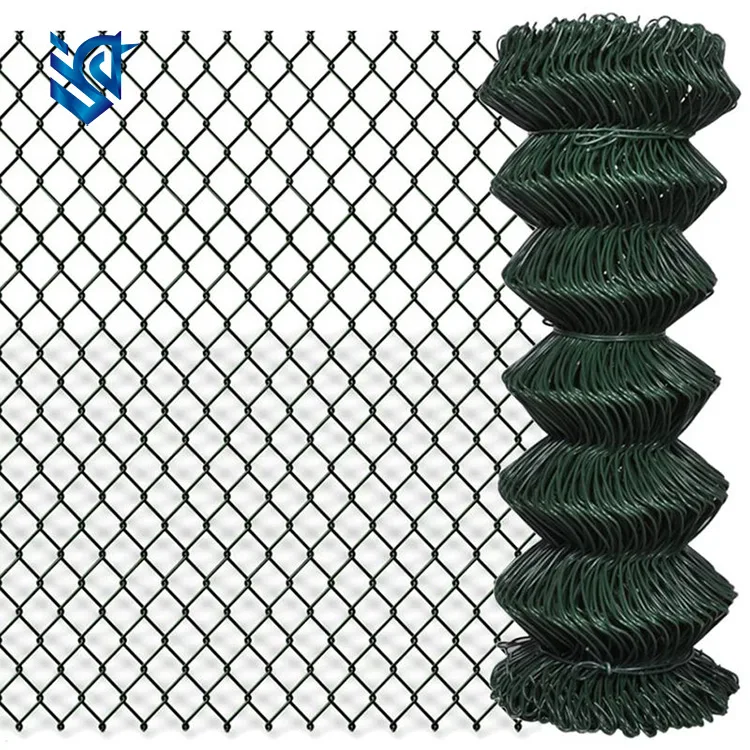
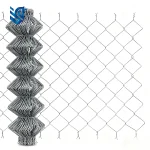
Chain link mesh also can be called diamond wire netting, hook net, active mesh, etc.
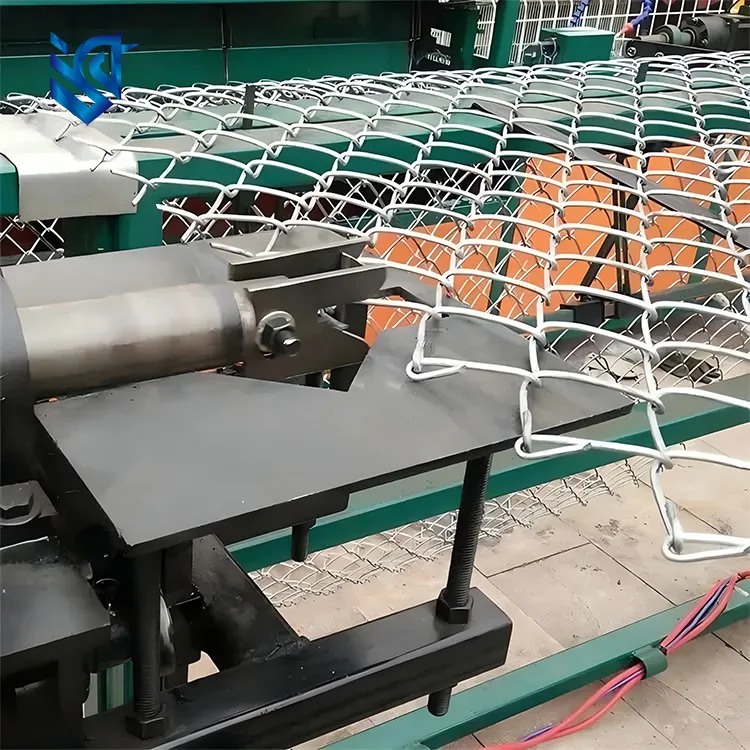
Various materials of metal wire are processed into flat spiral semi-finished products by chain link mesh machine, then screwed together.
Material: Electro galvanized wire, hot dipped galvanized wire, zinc and aluminum alloy wire, stainless steel wire, PVC coated wire.
Characteristics: simple weaving, uniform mesh hole size, beautiful and practical, hard to corrode, long service time, practical.
Application: Breeding protection net, coal mine protection net, court protection net, stadium fence net, training field protection net, slope protection, green fencing, riverside, building, residential area safety protection, workshop/warehouse isolation.
Chain link fences come in a variety of qualities, colors, sizes and types. Fences are made of 4 parts: woven mesh, frame, accessories and gates. Each of these components is available in a range of weights and types of coatings, which you can mix and match to save costs and make your project more unique. Choose chain link fences based on wire specifications, mesh size and protective coating type.
Several types of surface treatments help protect and beautify steel chain fences: electro-galvanized, hot-dip galvanized, PVC coated(we call it PVC coating chain link fence or powder coated chain link fence), etc. Chain link fences usually have a heavy galvanized coating to ensure long service life.
Advantages of diamond mesh structure:
Flexible installation; strong; will not crack; the bottom will not sag or roll up.
Applications:
Residential Fencing: Commonly used around yard fences, garden fences, and pool fences, offering a secure boundary without obstructing views.
Commercial and Industrial Fencing: Used to secure properties, parking lots, airport fences and industrial sites, providing a strong barrier to unauthorized access.
Sports Facilities: Often used to enclose sports fields, tennis courts, and playgrounds, providing a safe and defined area for activities.
Temporary Fencing: Used at construction sites, events, and other temporary locations to create a secure perimeter that can be easily installed and removed.
Chain link fence production process:
1) High-quality low-carbon steel wire rod is used as raw material, and then a wire drawing machine is used to make steel wire of specified wire diameter.
2) Surface treatment: low-carbon steel wire is made into PVC wire, electro-galvanized wire and hot-dip galvanized wire. Regarding the zinc thickness of hot-dip galvanized wire, we can customize it according to customer requirements.
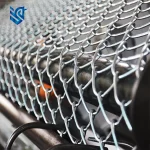
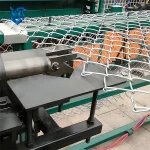
3) Weaving: Use wire mesh weaving machinery to make the surface-treated low-carbon steel wire into a preformed form, and then connect them together.
4) Edges of chain link fence: There are two types. One is folded edge and the other is twisted edge. Use special tools to fold or twist the edge. Folding edge is more popular than twisting edge. Customers can choose their own needs.
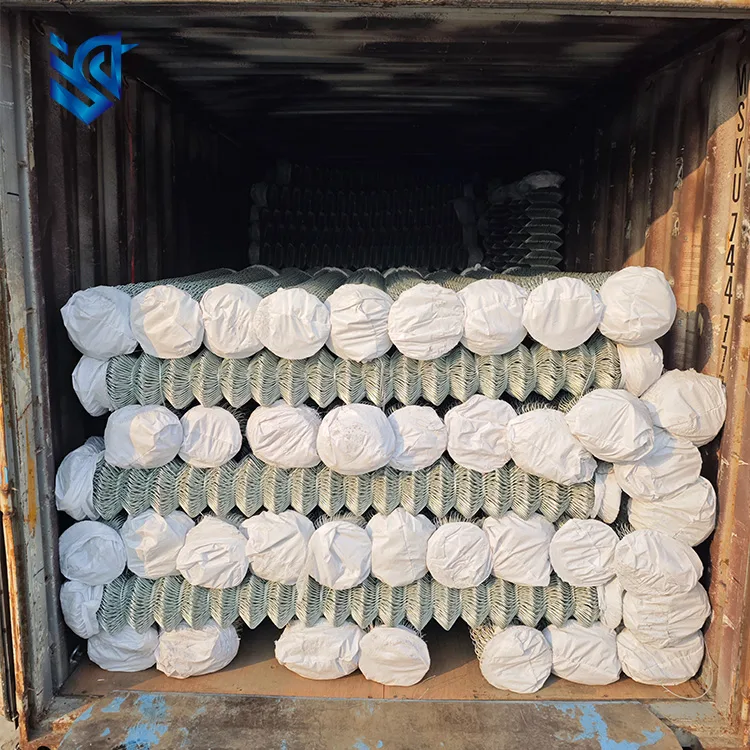
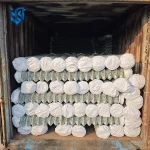
5) Net roll shrinkage: We use advanced machines to make the roll diameter of chain link fence into the smallest roll diameter, saving transportation costs by saving volume.
6) Packaging: Wrap both sides of the shrink roll with a woven bag.
7) Common specifications of wire mesh fences are as follows:
| Sizes of diamond wire mesh | ||||||||
| Opening | 1” | 1.5” | 2” | 2.25” | 2.4” | 2.5” | 3” | 4” |
| 25mm | 40mm | 50mm | 55mm | 60mm | 65mm | 76mm | 100mm | |
| Wire diameter | 18#-7# | |||||||
| 1.20mm-5.00mm | ||||||||
| Roll length | 10m-30m | |||||||
| Roll width | 0.5m-4.0m | |||||||
| Material and specifications can be made as customers’ requirements. | ||||||||