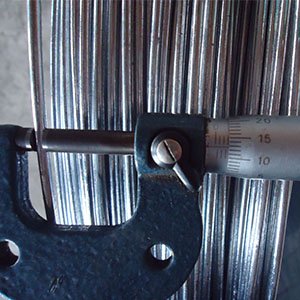
The galvanized wire quality inspection process is an important link to ensure product quality, mainly including the following aspects:
1. Appearance quality inspection: Check whether the surface zinc coating of the galvanized iron wire is uniform and smooth, and whether there are zinc nodules, zinc slag, leakage plating, rust, and other phenomena.
2. Size specification inspection: Use measuring tools to measure the diameter, length, and other size specifications of the galvanized wire to ensure that the product meets the standard requirements.
3. Mechanical properties test: such as tensile strength, elongation, etc., the mechanical properties of galvanized wire are evaluated by professional mechanical properties testing equipment to ensure that the product meets the use requirements.
4. Galvanized layer thickness detection: Use a spectrometer, coulometric method, or other methods to determine the thickness of the galvanized layer to ensure that it meets the anti-corrosion requirements.
5. Galvanized layer adhesion test: Detect the bonding force between the zinc layer and the substrate through the bending test, cross-cutting method, etc. to prevent shedding during use.
6. Corrosion resistance test: Evaluate the corrosion resistance of galvanized iron wire through salt spray test and other methods to simulate the use under environmental conditions to verify the long-term stability of the product.
During the quality inspection process, quality inspectors need to operate strictly with relevant standards and requirements to ensure the accuracy and reliability of the test results. At the same time, it is also necessary to prevent and control quality problems that may occur during the production process to ensure the stability and consistency of product quality.
In summary, the production process and quality inspection process of galvanized wire are important guarantees to ensure product quality and safety. Through strict production process and quality inspection process control, high-quality galvanized wire products that meet relevant standards and requirements can be produced.